
Broccoli Sprouts and Oestrogen - Why This Tiny Food Is a Big Deal in Perimenopause
Top Tip
If you do just one thing eat 2 tablespoons of broccoli sprouts every day. Broccoli sprouts contain up to 100 times more sulforaphane than mature broccoli. Sulforaphane supports your body's ability to clear used oestrogen, which is one of the most important processes for hormone balance during perimenopause.
Have you heard the buzz about broccoli sprouts?! These little greens are easy to add to your diet and punch far above their weight! They also easy to grow at home and I’ll share my simple step-by-step guide for growing your own at home below.
Last week I wrote about xenoestrogens, the synthetic chemicals found in plastics, personal care products and candles that mimic oestrogen in the body and add to the hormonal load your liver and gut are already working to clear.
This week I want to talk about the other side of that equation. Not just reducing what goes in, but actively supporting your body's ability to clear what's already there.
And the most powerful single food I know of for that job is broccoli sprouts.
What are broccoli sprouts and why are they different from regular broccoli?
Broccoli sprouts are simply young broccoli plants harvested when they're around three to five days old. At this stage they look like small, curly shoots with tiny green leaves (a bit like cress) - nothing like the broccoli you'd buy in the supermarket.
The reason they matter so much nutritionally is what happens at this early stage of growth. Broccoli sprouts contain very high concentrations of a compound called glucoraphanin. When sprouts are chewed, chopped or digested, glucoraphanin is converted into sulforaphane which is the biologically active compound that researchers are most interested in.
Critically, broccoli sprouts contain up to 50 to 100 times more sulforaphane than mature broccoli. (1) You don't need to eat a huge amount to get a meaningful dose, just two tablespoons a day is enough to make a difference.
What is sulforaphane and what does it do in the body?
Sulforaphane is a potent antioxidant and anti-inflammatory compound. It's been studied extensively for its effects on detoxification, cellular protection and hormone metabolism. A 2025 comprehensive review published in Applied Sciences by researchers at Johns Hopkins University School of Medicine specifically examined sulforaphane's effects on female hormonal health including menopause and perimenopause, describing multiple applications and copious mechanistic evidence supporting its use. (2)
It's worth being precise about how sulforaphane works. It doesn't detoxify your body directly. Instead it switches on your body's own defence and repair systems, specifically activating a pathway called NRF2, a master regulator of the body's detoxification and antioxidant defence. (3) This boosts Phase II liver enzymes that neutralise and prepare harmful compounds for elimination.
Think of it as turning up the volume on your body's own natural clearing system rather than doing the clearing itself.
How does sulforaphane support oestrogen clearance in perimenopause?
This is where broccoli sprouts become particularly relevant for midlife women.
Oestrogen that has been used by the body needs to be cleared efficiently through two main pathways - the liver and the gut. When this clearance process works well, used oestrogen is broken down, packaged up and excreted. When it's disrupted, oestrogen can be reabsorbed and recirculated rather than excreted, contributing to hormonal imbalance.
Sulforaphane supports this clearance process in several ways. It activates both Phase I and Phase II liver detoxification enzymes, helping the liver process used oestrogen more efficiently. (4) Research has shown that sulforaphane can inhibit the formation of more problematic oestrogen metabolites and may shift oestrogen breakdown toward safer metabolic routes. In one study, even minor increases in broccoli consumption in postmenopausal women improved their ratios of protective to potentially problematic oestrogen metabolites. (5)
In perimenopause when oestrogen is already fluctuating erratically, and particularly if you're also exposed to xenoestrogens from your environment or taking HRT, supporting efficient oestrogen clearance through the liver becomes even more important.
What other benefits does sulforaphane have in perimenopause?
Beyond oestrogen clearance, sulforaphane has several other properties that are particularly relevant in midlife:
Anti-inflammatory effects that may help reduce the inflammation linked to hot flushes, bloating and joint aches
Blood sugar regulation - sulforaphane supports healthy blood sugar metabolism which is directly relevant to weight management, energy and mood in perimenopause
Brain and cognitive protection - sulforaphane has neuroprotective properties and emerging research suggests it may support brain clarity and cognitive function
Gut health support - by supporting detoxification pathways and reducing inflammation, sulforaphane contributes to a healthier gut environment which in turn supports hormone clearance through the estrobolome
Antioxidant protection - sulforaphane boosts glutathione, one of the body's most important antioxidants, which helps protect cells from the oxidative stress that increases in perimenopause

All you need to get started growing your own broccoli sprouts
How to Grow Broccoli Sprouts at Home
You can usually buy broccoli sprouts in the supermarket, but you can easily grow them yourself and it’s much cheaper! You don’t need a garden, just a jar and some seeds!
What You’ll Need:
Broccoli sprouting seeds (make sure they are safe for sprouting)
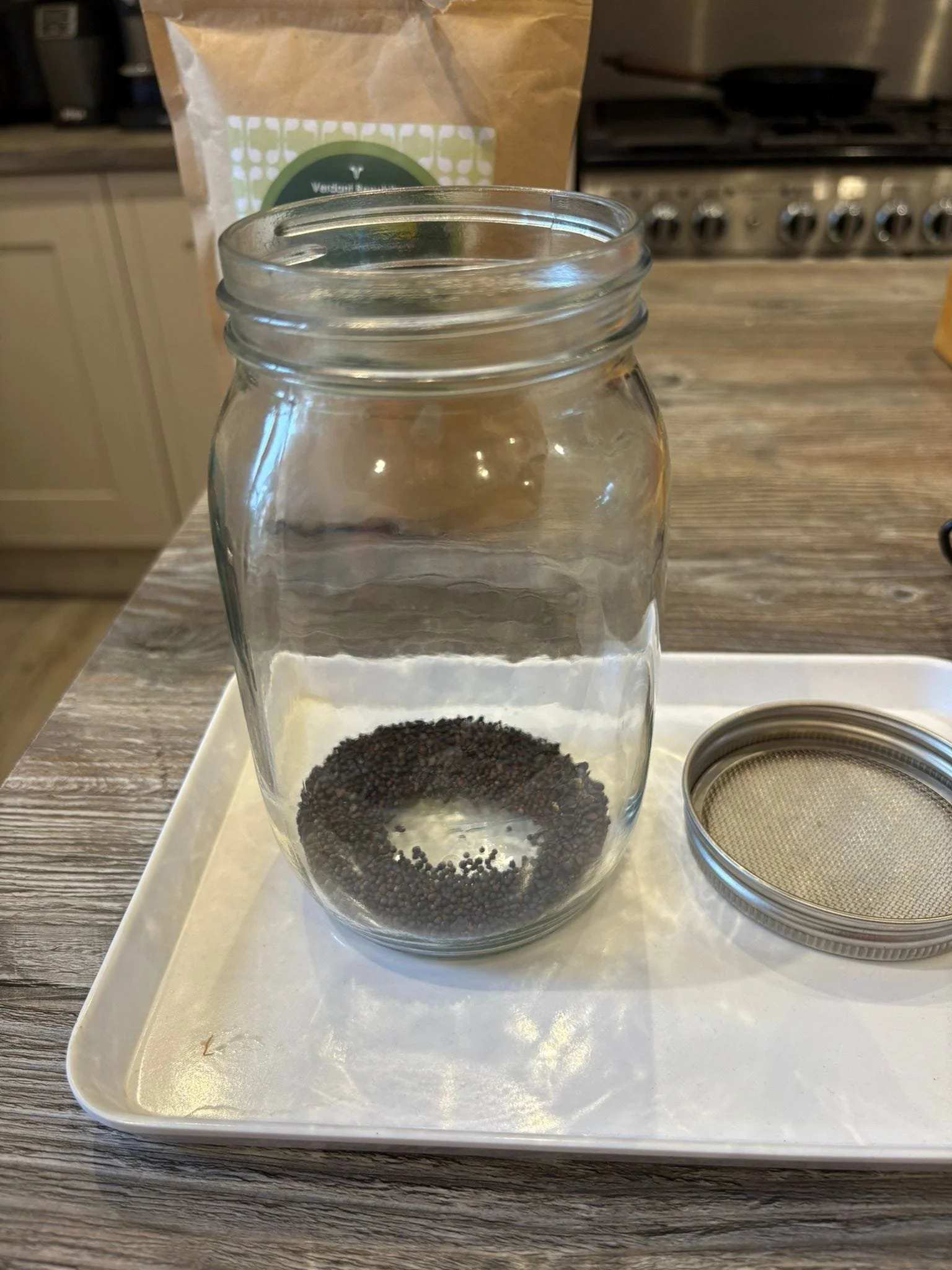
Clean glass jar (like a mason jar) with a mesh lid (or breathable cloth to cover the jar) - I bought a set from Amazon!
Water
Step-by-Step:
Measure & Rinse: Add 2 tablespoons of broccoli seeds to your jar. Rinse them well in cool water.
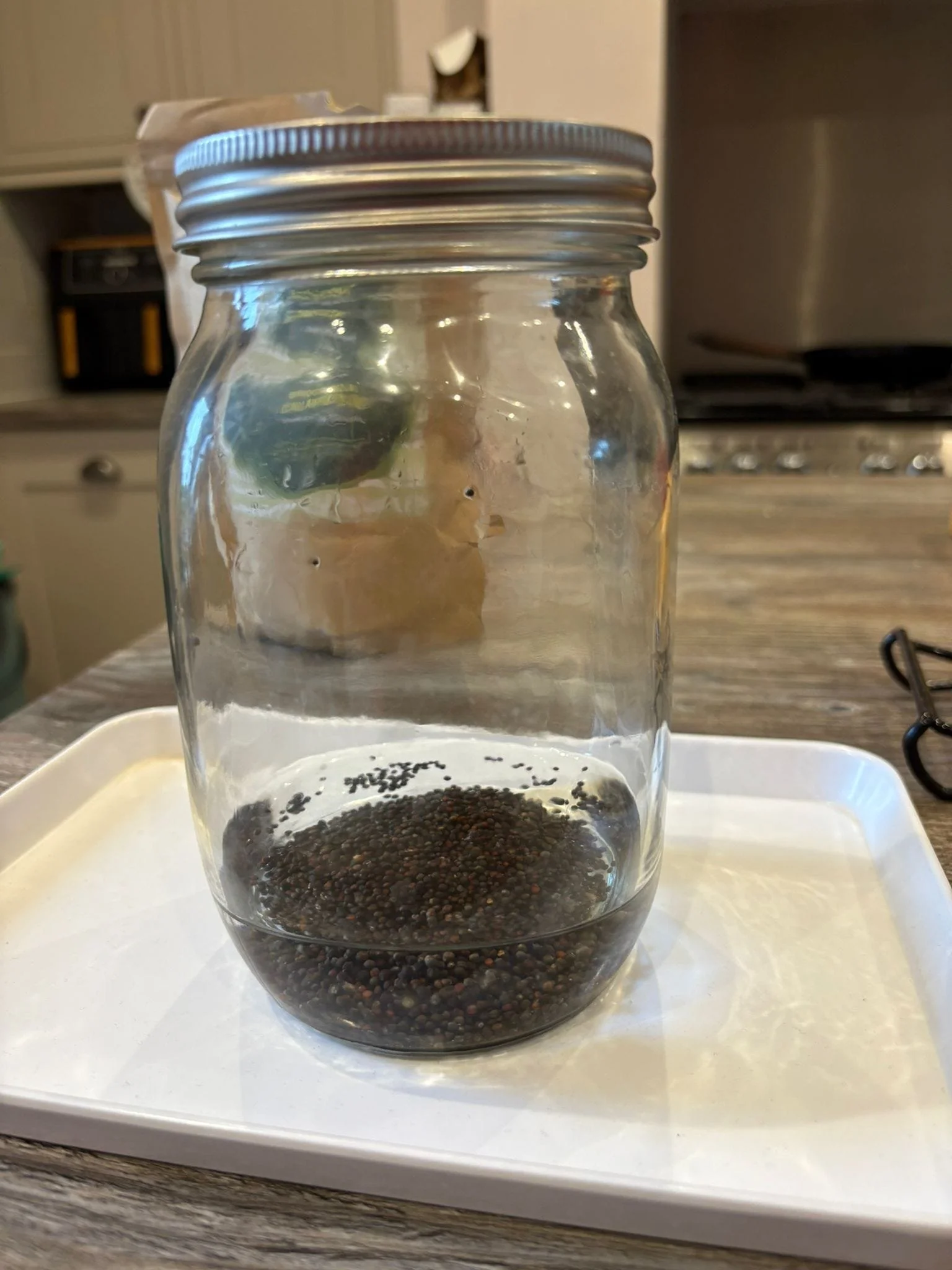
Soak: Add fresh water to cover the seeds, soak overnight (8–12 hours).
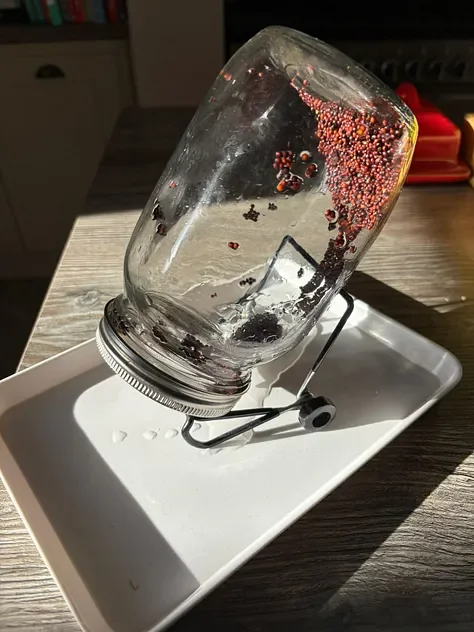
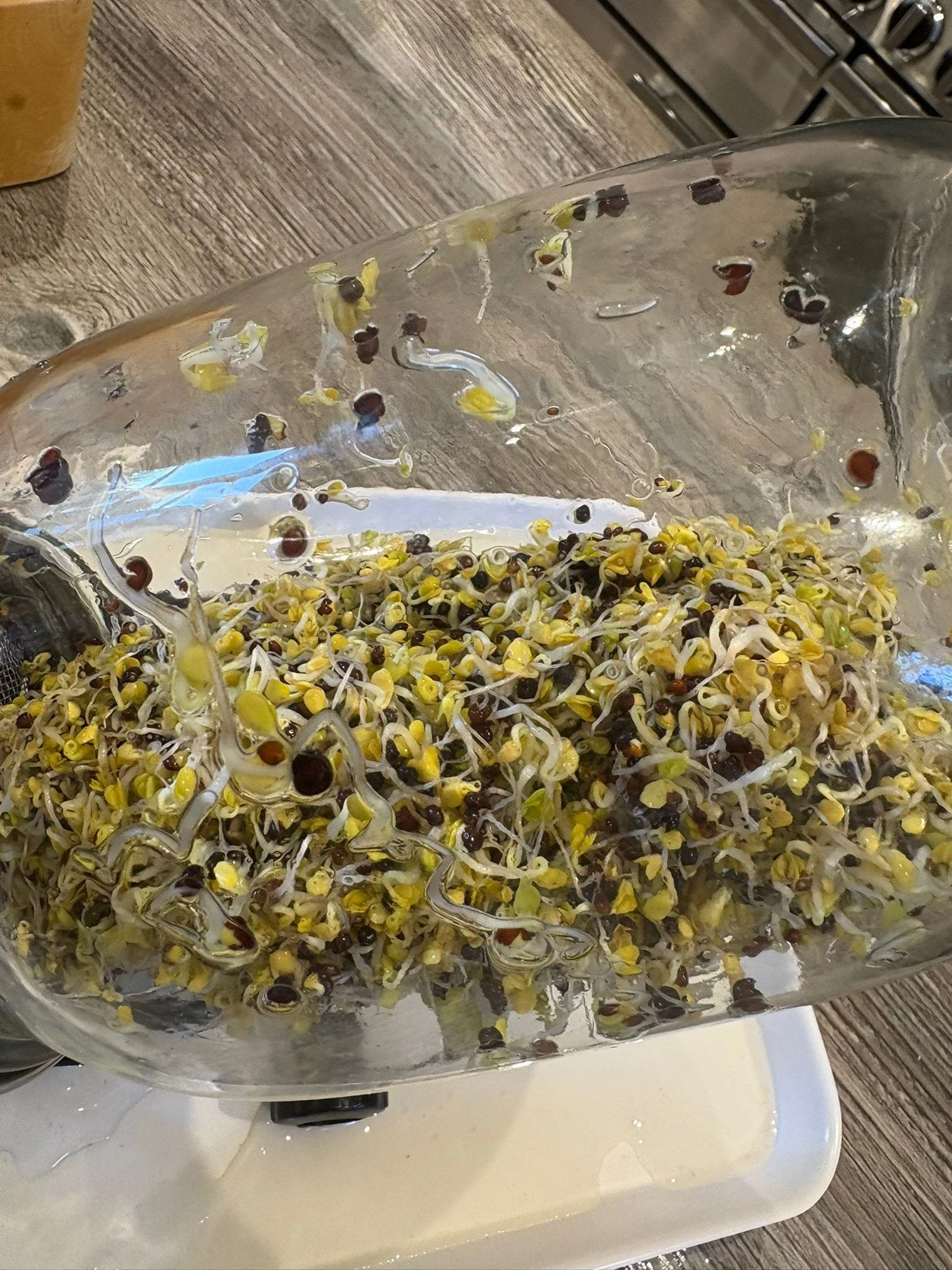
Drain: In the morning, drain the water, rinse again and then let the jar rest at an angle to let the water drain. I bought a kit with a stand and a tray online but you could rest the jar in a tupperware box too.
Rinse & Drain: Twice a day, rinse the seeds with cool water, swirl, and drain thoroughly. Let the jar rest upside down at an angle to allow airflow.
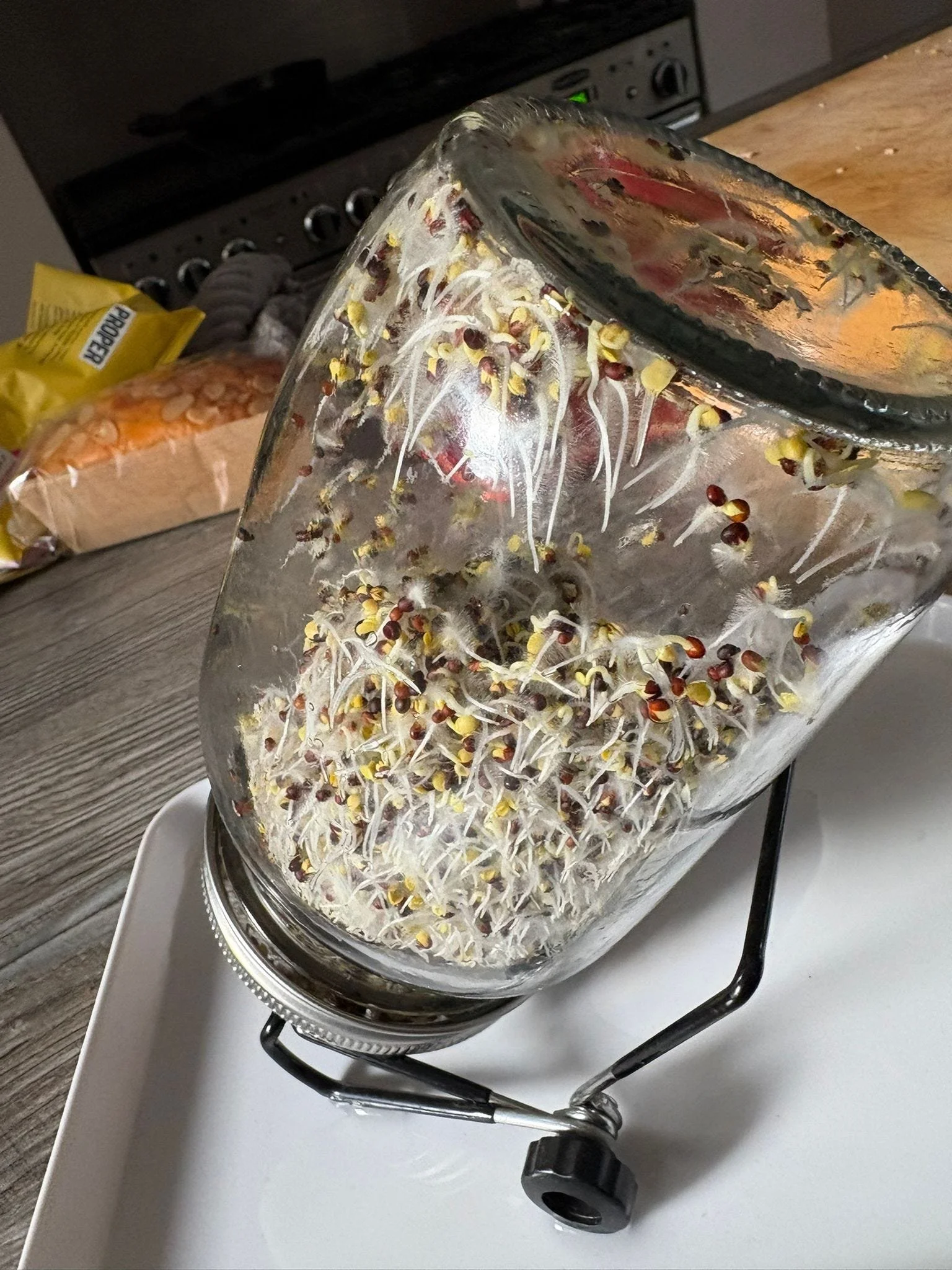
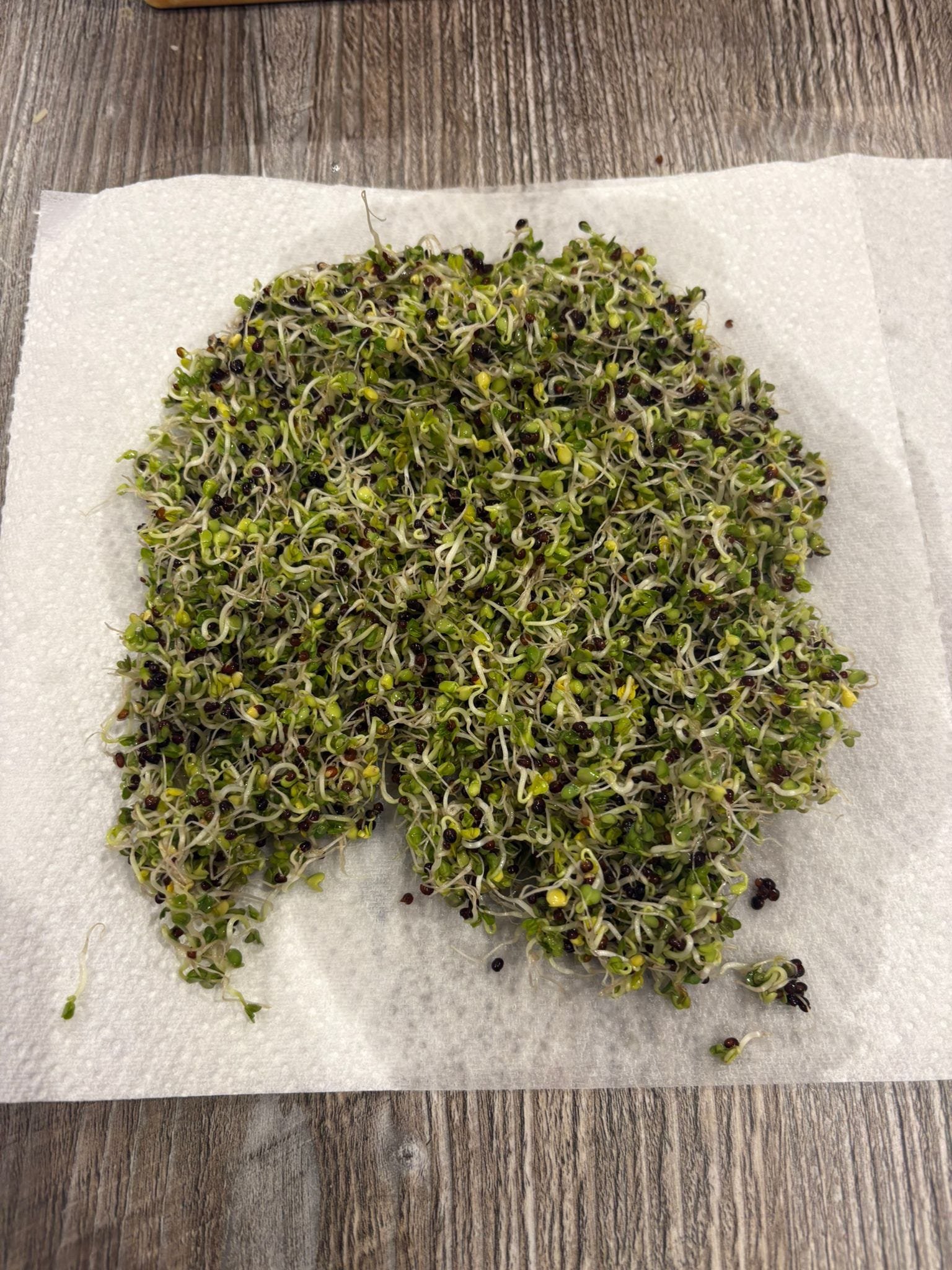
Watch Them Grow: Within 3–5 days, you’ll see a jar of curly green sprouts ready to harvest (when they reach 1–2 inches and the leaves have opened). On around day 2/3 the sprouts may look slightly furry- don’t worry, this is normal! Just rinse and drain as normal.
Final Rinse & Store: Give a last rinse, drain, then keep sprouts in the fridge (in the jar or on a paper towel in a container). Enjoy within a few days for peak freshness.
How do you eat broccoli sprouts every day?
The good news is that broccoli sprouts have a mild, slightly peppery flavour and add a pleasant crunch to almost anything. Here are some easy ways to get your two tablespoons a day:
• Scattered over salads or grain bowls just before serving
• Piled into sandwiches and wraps for extra crunch
• Stirred through scrambled eggs at the very end of cooking
• Added to a smoothie - they blend almost invisibly and don't affect the flavour
• Topped onto avocado on toast
• Sprinkled over soup just before serving
One important note on cooking: sulforaphane is sensitive to heat. Eating sprouts raw or adding them to dishes after cooking preserves the sulforaphane content. If you do cook them keep it very brief - a light wilt rather than a full cook.
Can you get enough sulforaphane from mature broccoli?
Yes, mature broccoli does contain sulforaphane precursors and is absolutely worth eating regularly. But because broccoli sprouts contain up to 100 times more glucoraphanin than mature broccoli, you need a much smaller quantity of sprouts to achieve the same sulforaphane dose.
Two tablespoons of broccoli sprouts provides a meaningful clinical dose. You'd need significantly more mature broccoli to get the equivalent. Both are valuable but if you want the most efficient sulforaphane source, sprouts are hard to beat.
Why Try Broccoli Sprouts?
If you’re in perimenopause (or just want a happy gut), adding broccoli sprouts is a simple win for supporting energy, digestion, and hormone balance. Their high sulforaphane content makes them a unique food for natural wellness.
Curious to give them a go? Start with 2 tablespoons a day, and see how you feel. I’d love to hear about your experience or if you have questions, drop them in the comments!
References
1. OrganiClinic. The Role of DIM and Sulforaphane in Estrogen Detox. October 2025. organiclinic.com
2. Fahey JW et al. The Impact of Sulforaphane on Sex-Specific Conditions and Hormone Balance: A Comprehensive Review. Applied Sciences. Published January 2025. Johns Hopkins University School of Medicine. doi.org/10.3390/app15020522
3. Solutions 4 Health. How Sulforaphane Supports Estrogen Metabolism and Detoxification. solutions4health.com
4. Phytoceutics. Sulforaphane for Hormonal Balance — Detox Support and Oestrogen Aid. phytoceutics.com
5. Solutions 4 Health. How Sulforaphane Supports Estrogen Metabolism and Detoxification. solutions4health.com
Want to download the printable growing guide?
Get my step-by-step Grow Your Own Broccoli Sprouts handout - a simple one-page windowsill guide you can keep on your fridge.
Frequently Asked Questions
-
Yes. Broccoli sprouts are one of the richest dietary sources of sulforaphane, a compound that supports the liver's ability to clear used oestrogen. In perimenopause when oestrogen is already fluctuating erratically, supporting efficient oestrogen clearance through the liver and gut is particularly important. A 2025 review by researchers at Johns Hopkins University specifically examined sulforaphane's effects on female hormonal health including perimenopause, noting copious mechanistic evidence supporting its use.
-
Broccoli sprouts contain up to 50 to 100 times more glucoraphanin, the precursor to sulforaphane, than mature broccoli. This means you can achieve a meaningful clinical dose of sulforaphane from just two tablespoons of sprouts daily, whereas you would need significantly more mature broccoli to get the equivalent.
-
You need a glass jar with a mesh lid, organic broccoli sprouting seeds and water. Soak the seeds overnight, then rinse and drain twice daily for five to six days. No garden, no specialist equipment and no green fingers required. The full step-by-step method is in the blog post above.
-
Sulforaphane activates NRF2, a master regulator of the body's detoxification and antioxidant defence system. This boosts Phase II liver enzymes that neutralise and prepare used oestrogen metabolites for elimination. Sulforaphane may also shift oestrogen breakdown toward less problematic metabolic routes. In practical terms this means supporting your liver's ability to process and clear oestrogen more efficiently.
-
Sulforaphane is sensitive to heat so eating sprouts raw preserves the most sulforaphane. Adding them to dishes after cooking — scattered over a finished salad, stirred into eggs at the very end, sprinkled over soup just before serving — is the best approach. If you do cook them keep it very brief.
-
Broccoli sprouts work best as part of a broader approach to hormone support that includes adequate protein, dietary fibre for gut health and oestrogen clearance, and reducing environmental xenoestrogen exposure. Two tablespoons daily added to smoothies, salads, eggs or wraps is a simple, low-effort way to support oestrogen metabolism alongside other dietary habits.
Catherine Scott is a Registered Nutritional Therapist (mBANT rCNHC) based in Leeds, specialising in perimenopause, gut health and energy. She works with midlife women online across the UK.
This article is for educational purposes and is not intended to replace medical advice. Please consult your GP or a registered health professional if you have specific health concerns.