
Why Your Skin Changes in Perimenopause and What Actually Helps
If your skin has started behaving in ways it never did before, drier, more sensitive, reactive to products you have used for years, new breakouts or rashes that will not quite go away, you are not imagining it and you are not alone.
Skin changes are one of the least talked about symptoms of perimenopause. Not as headline-grabbing as hot flushes or as frightening as mood changes, but for many women, deeply frustrating. I know this because I experienced it myself. (More on that in a moment).
The good news is that once you understand what is actually happening hormonally, a lot of it starts to make sense. And there is a lot you can do, both from the inside and the outside.
What oestrogen does for your skin
Oestrogen is not just a reproductive hormone. It has receptors throughout the body, including in the skin, where it plays a significant role in maintaining skin health, structure and function.
Specifically, oestrogen stimulates collagen production. Collagen is the structural protein that gives skin its firmness and elasticity and we lose roughly 30% of it in the first five years after menopause. This is why skin can start to feel thinner, more crepey and less bouncy in perimenopause, often before women have connected the change to their hormones.
Oestrogen also supports the skin's barrier function, which is the outermost layer of the skin that keeps moisture in and irritants out. When oestrogen declines and fluctuates, the skin barrier becomes less effective. Skin loses moisture more easily which contributes to dryness, tightness and increased sensitivity.
There are also oestrogen receptors in the sebaceous glands, which produce the skin's natural oils. Hormonal changes affect how much oil the skin produces, which is why some women find their skin suddenly becomes drier while others experience new breakouts, particularly around the chin and jaw.
The histamine connection. Why skin can become reactive in perimenopause
This is something that does not get nearly enough attention and it explains a lot of the mysterious new skin sensitivities that can appear in midlife.
Oestrogen and histamine have a bidirectional relationship. Oestrogen stimulates the release of histamine from mast cells in the body. And histamine in turn stimulates the production of more oestrogen. When oestrogen is fluctuating erratically, as it does in perimenopause, this cycle can become dysregulated.
The result can be increased histamine levels in the body, which shows up in the skin as increased reactivity, flushing, itching, hives or sensitivity to products, foods and environmental triggers that were never a problem before. Women may also notice worsening of conditions like eczema, rosacea, or new skin conditions that appear to come from nowhere.
This is what happened to me. I developed perioral dermatitis, an inflammatory skin condition that causes a rash around the mouth and chin, in my mid 40s. I had never had it before in my life and I’d rarely had any problems with my skin since being a teenager. It took me a while to make the hormonal connection, but when I did, and when I started supporting my histamine response and choosing gentler, cleaner products, my skin improved significantly.
If you have noticed your skin becoming more reactive in perimenopause, the histamine link is worth exploring. Supporting the gut microbiome, managing stress and reducing the overall histamine load in the diet can all help, as can choosing skincare products with fewer synthetic fragrance chemicals and potential irritants.
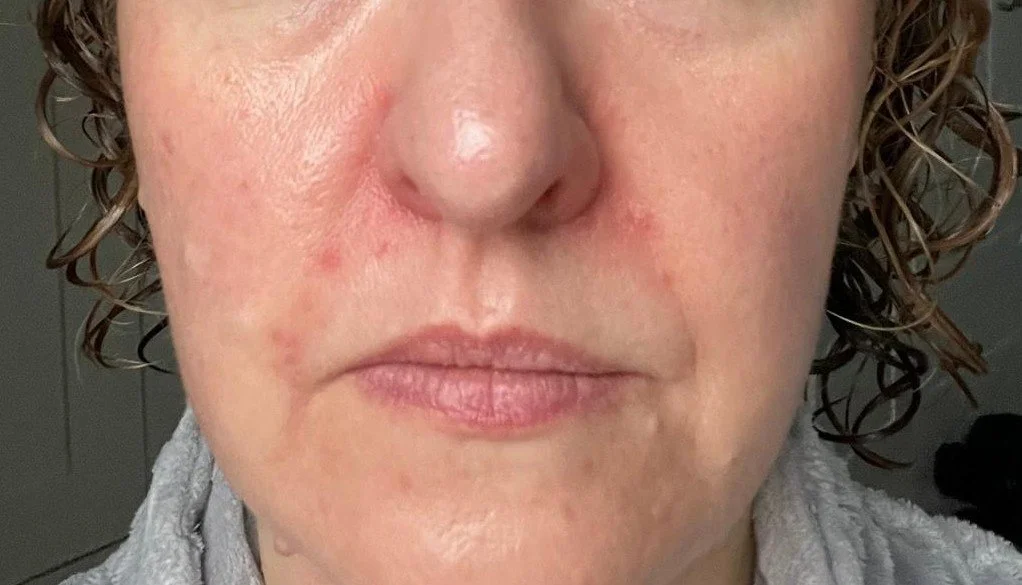
Apologies for the extreme close up but this was what the perioral dermatitis looked like on my skin.
Skin health from the inside out
As a nutritional therapist I always start with what is happening internally, because the skin is a reflection of what is going on inside the body. No amount of topical product will compensate for nutritional gaps or chronic inflammation.
Omega 3 fatty acids
Omega 3s are anti-inflammatory and essential for skin barrier function. They help the skin hold moisture, reduce sensitivity and support the underlying structure that keeps skin looking and feeling healthy. The skin's lipid barrier is partly made up of fatty acids and when we are deficient in omega 3 the barrier becomes compromised.
Most people in the UK are not getting adequate omega 3 from their diet. The best dietary sources are oily fish such as salmon, mackerel, sardines and herring, ideally two to three times a week. If you are not eating oily fish regularly, a high quality omega 3 supplement is worth considering.
I use and recommend Bare Biology. Their products are sustainably sourced, third-party tested for purity and the omega 3 content is significantly higher than many high street alternatives. You can buy from them here and get £5 off your first order. [This is an affiliate link - if you purchase through this link I earn a small commission and you receive a £5 discount on your first order. Using affiliate links is a brilliant way to support my blog and free content at no cost to you.]
Collagen
Collagen supplements have become increasingly popular and the evidence behind them has improved considerably in recent years. Hydrolysed collagen peptides, the form used in most supplements, have been shown in several studies to support skin elasticity, hydration and the reduction of fine lines when taken consistently over several months.
Given that oestrogen decline directly accelerates collagen loss in perimenopause, this is one of the areas where supplementation alongside a nutrient-rich diet can make a meaningful difference.
Vitamin C is essential for collagen synthesis, so alongside any collagen supplement make sure you are getting adequate vitamin C from your diet. Citrus fruit, kiwi, bell peppers, broccoli and strawberries are all excellent sources.
I use Bare Biology for collagen too. Their collagen is marine sourced, unflavoured and easy to add to smoothies or hot drinks.
[Affiliate link — same as above. Thank you for supporting my work this way.]
Hydration
This sounds simple but it matters more in perimenopause than at any previous point in your life. Declining oestrogen affects the skin's ability to retain moisture and many women notice their skin becoming significantly drier in midlife even if it was previously oily or combination.
Drinking adequate water supports skin hydration from the inside but so does eating foods with a high water content, such as cucumber, celery, courgette, berries and watermelon, and reducing the things that dehydrate, particularly alcohol and excess caffeine.
Hyaluronic acid, which occurs naturally in the body and holds up to 1000 times its weight in water, also declines with age. A hyaluronic acid serum applied to damp skin before moisturiser can make a noticeable difference to skin plumpness and hydration.
The case for clean, gentle products
Given everything we know about the histamine link and the compromised skin barrier in perimenopause, this is not the time for harsh, heavily fragranced or chemically complex skincare.
Synthetic fragrances are one of the most common skin irritants and they appear in a huge range of skincare, haircare and personal care products. When the skin barrier is already compromised and histamine levels are elevated, fragrance chemicals can trigger the kind of inflammatory responses that show up as redness, itching, or rosacea flares.
It is also worth being cautious with products containing high concentrations of active ingredients like retinol or strong acids such as AHAs and BHAs. While these can be effective for skin concerns like fine lines and uneven texture, they can be too harsh for skin that is already compromised in perimenopause. A disrupted skin barrier combined with elevated histamine levels means that what your skin tolerated well in your 30s may now cause irritation, increased sensitivity or worsening of reactive conditions like perioral dermatitis. If you do use actives, introduce them slowly, use lower concentrations and always follow with a good moisturiser to support the barrier.
This is something I experienced firsthand and it is part of the reason I became a Tropic ambassador. Tropic products are made without synthetic fragrances, parabens, microplastics or other common irritants. They use plant-based ingredients and I have found them much better tolerated by my own reactive skin than many conventional products I used previously.
I am transparent about being a Tropic ambassador, which means I earn a commission if you purchase through my link. I became an ambassador because I use the products myself and rate them, not the other way around. Using my link is also a lovely way to support my free content at no extra cost to yourself. You can buy online through my webshop - https://www.tropicskincare.com/catherinescott_2
The importance of SPF - yes, even on cloudy days!
If there is one single skincare habit worth building in perimenopause and beyond, it is daily SPF.
Here is something that surprises many people. UVA rays, which are the rays responsible for skin ageing, collagen breakdown and increased skin cancer risk, penetrate through glass and through cloud cover. You can accumulate significant UV damage on a grey British day simply by sitting near a window or driving in your car.
UVB rays are the ones that cause burning and are more seasonal. But UVA is present year-round at fairly consistent levels regardless of weather or season. This is why broad-spectrum SPF, which protects against both UVA and UVB, should be part of your daily routine every single day.
Given that collagen loss in perimenopause is already accelerating, protecting the collagen you have from UV damage is one of the most impactful things you can do for your skin long term.
A note on perioral dermatitis and other inflammatory skin conditions
If you have developed a new inflammatory skin condition in perimenopause, perioral dermatitis, rosacea, eczema, persistent redness or a rash that keeps returning, please do see your GP in the first instance to rule out other causes and get a proper diagnosis.
From a nutritional perspective, supporting the gut microbiome, identifying and reducing histamine triggers in the diet, ensuring adequate omega 3 intake and reducing inflammatory foods can all play a meaningful supporting role alongside any medical treatment.
If you would like to explore the nutritional and hormonal picture behind your skin changes in more detail, this is exactly the kind of joined-up thinking I do with clients.
In summary
Skin changes in perimenopause are hormonal, real and often more complex than they appear on the surface. The key pillars from a nutritional perspective are adequate omega-3 for barrier function and inflammation, collagen support, hydration inside and out, and reducing the inflammatory and histamine load on the body.
From the outside, choosing gentle, clean products without synthetic fragrance and wearing SPF every single day are the two habits that will make the biggest long-term difference.
Your skin is telling you something. It is worth listening.
Are you struggling with skin changes in perimenopause and not sure where to start?
I can help discover what the root cause of your skin problems is and support it from the inside out. Find out more and book a free discovery call here: https://www.bookable.page/catherinescottnutrition/discovery-call
Disclosure
I am a Tropic Skincare ambassador and a Bare Biology affiliate. This means I earn a commission if you purchase through my links, at no extra cost to you. Using these links is a lovely way to support my blog and free content. I only recommend products I use myself.